Zadar - 14 days to the north
Day 1. Zadar - We invite you to the magic of the ancient Zadar, the big town in the very heart of the Adriatic, which is often called a "small Croatian Rome". Three thousand years of history, unique sacral buildings and a rich cultural heritage are responsible for this title. All this is completed with natural characteristics of the Zadar region which boasts the 1 200 kilometers long picturesque and clean sea shore and the conglomerate of about 300 islands and islets. You will be met in Zadar by hospitable people with whom you can drink a small glass of the authentic Zadar liqueur Maraskino or chat about basketball which has made Zadar famous all over the world!
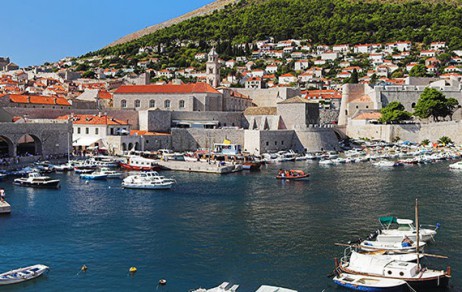
For centuries the capital city of Dalmatia and today the center of the region. A city with a rich heritage of world importance, visible at every step. The Roman Forum from the 1st century, St. Donatus’ Church from the 9th century is the most famous medieval basilica and trademark of the city. The reconstructed Romanesque St. Grisigono´s Church from the 12th century and the St. Mary´s bell tower from the year 1105; the St. Anastasia´s Cathedral from the 13th century; the People´s Square with the City´s Lodge and Guardhouse from the 16th century, as well as the mighty fortification walls with first class Sea(farer´s) and Land gates from the 16th century followed by the Three and Five Wells Squares and many palaces, villas and other historic monuments. The City of Zadar is not only known for its historical and cultural monuments but also for its amply supplied vegetable and fish markets on the peninsula (a part of the old city).
Day 2. Veli Iz – an island located in the Middle canal, between island of Ugljan and Dugi otok, surrounded by ten islets. In two settlements on Veli Iz (Mali Iz and Veli Iz) you can expect pleasant owners of private accommodations. One of the major crafts, still popular in Veli Iz is pottery. This charming place has a nice hotel and a marina Tankerkomerc that provides 150 berths and 50 boat places on the ground, and it is open all year round.
Day 3. Simuni - 7 km from the town of Pag, is a small fishing settlement on the western coast of the northern Dalmatian island of Pag that is connected to the mainland by bridge (Paski bridge) and daily ferry lines. The place lies in the bay of the same name where one of the most beautiful marinas on the Adriatic with a capacity of 150 berths has been built. Although the inhabitants of Simuni have traditionally lived off of fishing and agriculture, primarily olive growing, Simuni has developed into a popular, quiet family holiday destination due to the beautiful shoreline. Pebble and sandy beaches are safe for small children. Its restaurants and konobas (local restaurants) serve local dishes: traditionally prepared lamb (Paska janjetina), well-known cheese with olives, seafood prepared according to traditional recipes and excellent wines produced on the island. ACI Marina Simuni lies in the western part of Simuni Bay in the Maun Channel. The marina has 200 berths and 70 boat places on land. Berths have water and power supply, and it is open all year round. A picturesque little town on the placid southwestern side of the island of Pag. There is a motor camp in a pine forest and a marina in the long bay.
Day 4. Rab - Rab is one of the island of the Kvarner Bay archipelago in the north of the Croatian Adriatic Sea. In addition to the ancient town of the same name, there are seven other idyllic places scattered over the island: Barbat, Banjol, Palit, Kampor, Mundanije, Supetarska Draga and Lopar. Some 9000 people live there, mostly by agriculture, fishing, shipbuilding and tourism. Tradition of organised tourism is today already 112 years old. The city is a typically medieval urban center surrounded by walls that are in large part still standing. If you love old cities in which every building brings to mind dozens of generations, you will feel really good in Rab. Above many of the Renaissance and Gothic portals you can still see the crests of the aristocratic families of Rab, the descendants of whom are your kindly hosts of today. Right next to the city walls is the lovely Komrcar park, and below it a long path and bathing place. You can spend your holiday in the shade of ancient pines, to the smell of resin and the blue of the sea, without ever having to do without the conveniences the city has to offer.
Day 5. Supetarska Draga (island of Rab) - The people of the Dragas have also combined modern and traditional ways of living, and this is easily sensed in tourist industry. There are guests who come back to the same hosts year after year, while new arrivals are quick to become attached to the place and the people. Draga is also interesting to people who come in boats; they are not limited to mooring off the shore, but can stay briefly by one of the neighboring islets, Maman, Srednjak or Sailovac. Islets are attractive with their clean and protected sand beaches and bays, and rich undersea life around them is discovered to the sport fisherman's. The Draga Bay is protected too; it is shallow and calm, and here many birds nest and over-winter. Once upon the time there were salt pans here, and in the Draga valley the Romanesque basilica of St. Peter was built in the eleventh century. Its beauty attracts the faithful and lovers of art alike.
ACI marina Supetarska Draga lies in the Bay of Supetarska Draga. The marina has 274 berths and 53 boat places on land. Berths have water and power supply and it is open all year round.
Day 6. Punat - Punat use to be a fishermen settlement which was first mentioned in document from 1377. It is situated at the entry to the Punat bay. The name Punat comes most probably from Greek word "pons", which means " the bridge ". There was a bridge over the narrow entrance to the Puntarska draga bay, connecting Punat with the peninsula Prniba. Small isle of Kosljun with the Franciscan monastery is a historical and nature remarkableness. With the beaches along the coast and well marked mountains trails is a great place to stay. ACI marina Punat has 830 berths supplied with water and power.
Day 7. Cres (island of Cres) - The town of Cres lies on the western, the most fertile, part of the island of the same name which is characterized by its stone, dense coniferous woods and the blue sea. Find your peace, choose your rock and discover why the island of Cres, whose sky is reigned by griffon vultures, whose soil is embellished by the Vransko Lake, a natural phenomenon, was a favorite destination since Roman times. ACI marina Cres lies in the southern part of Cres harbor, in a long sheltered bay on the western coast of the island of Cres. The marina has 473 berths and 120 boat places on land. All berths have water and power supply, and it is open all year round.
Day 8. Pomer - Pomer is located on the western side of the Medulin Bay. It was settled in Roman times, which is confirmed by well-preserved excavations of Roman villas and the remains of a thermal spa. Of the historical monuments, the Church of St. Flora from the Byzantine period stands out. Pomer was once well-known for raising and breeding of fish and mollusks, and today there are many seafood restaurants as a result of this. Pomer has a marina and a camp. The marina has 280 berths and 65 dry berths, with the corresponding services: a crane and repair shop. Pomer has many restaurants and inns, bakery, hairdresser´s and supermarket. The numerous private rooms and apartments with friendly hosts guarantee a real vacation in a fishing village. Pomer is a tourist destination close to Pula, in the southern part of the Istrian peninsula. In the Pomer marina, you will find everything that you need for your boat. The surrounding of Pomer is known for archaeological sites, dating back to the Roman period. The forests around Pomer are a great place for long walks and bike riding, while water sports equipment rental is available on the beach.
Day 9. Rovinj - Rovinj, one of the most beautiful Istrian towns, is situated on the west side of the peninsula, which is a favorite tourist destination. You will be able to see the cultural monuments from Illyrian, Roman, and Venetian times, while entertainment attractions will make from your vacation an unique adventure.This town, famous for its architectonic structure, will welcome you generously. One of the best marinas is at your disposal. The wonderful park-wood Zlatni Rt, with the shade of its exotic trees will remain for you an unforgettable part of the Rovinj summer fairy tale.
ACI marina Rovinj lies in the southeastern part of Rovinj harbor, in the vicinity of a small shipyard. It is surrounded with pine woods, only 1 km from the town center. The coast of St. Katarina Island provides shelter from all winds. The marina has 386 berths and 40 boat places on land. Berths have water and power supply, and it is open all year round.
Day 10. Pula - Situated at the southest end of the Istrian peninsula, Pula has been in existence since three thousand years. It represents a very fine combination of the old and modern city where many famous writers and composers have found inspiration for their masterpieces. Many cultural and historical monuments dominate its panorama and represents today the unique setting of various cultural and artistic events. Tourist facilities are located outside the town in woods close to the sea. Beaches stretch along, 100 km of beautiful and indented coast.
ACI marina Pula lies in the southeastern part of the city port. The marina has 213 berths. Berths have water and power supply, and it is open all year round.
Day 11. Mali Losinj - Mali Losinj is the biggest place on the island of Losinj, a Central Adriatic island. Situated in the Augusta bay, rich in fish, Losinj is the best-known sport and fishing center of the Adriatic. Dense coniferous woods make it an attractive holiday resort, while a mild climate is suitable for a century-old health tourism. A special curiosity of Mali Losinj are dolphins which inhabit its sea and contribute to an unforgettable atmosphere.
Day 12. Ilovik - Islands of Ilovik is an extension of the southern part of island of Losinj. Coast is easily to be reached, with numerous of bays. The biggest bay is located in the south-eastern part of the island of Ilovik. Between Ilovik and island of St. Peter is a 2,5 km long and 300m wide canal. Its aquatorium is well protected from all winds, and it is a safe place for all yachts and smaller boats. Ilovik is mostly hilly and overgrown with macchia.
Day 13. Molat – Molat is an island overgrown with macchia and pine woods, an ideal destination for all individualists and people who enjoy long walks accompanied by intoxicating aromas of Mediterranean herbs. Many bays are a great choice for sails-men and those who lake peace and quiet. In 1936. Molat had been visited by king Eduard VIII and Wallis Simpson, so why wouldn´t you?
Day 14. Sali – Dugi otok is the biggest island in the archipelago of Zadar. Southern part of this island is mostly made of stone, while the central and western parts are overgrown with macchia and partly with woods. Sali is definitely most important and the oldest settlement on this island that one should visit. Because of its intact nature, this is a great place for all individuals and people wanting peace and solitude.